Posts

TV: Capital - Marxism and Hegemony

  1) Re-read the  Mail Online review of  Capital . Why does it suggest that  Capital  features a left-wing ideology? The review argues that Capital presents wealthy characters negatively while showing immigrants and working-class residents sympathetically, suggesting criticism of wealth inequality and modern capitalism. 2) Choose  three  quotes from the review that are particularly critical of  Capital  and paste them into your blogpost. Do you agree with the criticisms? Why? “A heavy-handed lecture about multicultural London.” “Another example of the BBC’s liberal agenda.” “The rich are portrayed as shallow while immigrants are moral victims.” Partly — the programme clearly highlights inequality and social division, but this reflects real social issues rather than simply promoting political bias. It can also be seen as social realism rather than propaganda. 3) What scenes or characters from  Capital  could be read as promoting lef...
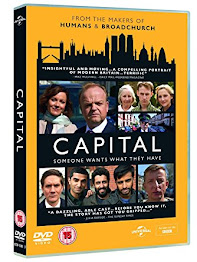
TV: Capital case study

Image
  1) What positive points does the review pick out about  Capital ?  What criticisms are made - either of the TV drama or the original novel? Capital is praised as a “complicated and brilliant portrait of London life” in a BBC1 adaptation of the novel — it captures a lot of the city’s diversity and inequalities within one street. The review highlights how much of London’s social mix is shown — from long-time residents and immigrant families to wealthy bankers and younger characters with different lifestyles and views. Sam Wollaston describes the drama as instantly recognisable — the lives and interactions of characters feel familiar to anyone who knows modern London. 2) What references can you find in the reviews and feature to the idea Capital is a 'state-of-the-nation' drama? How does it capture modern-day London? The Guardian review doesn’t offer strong negative criticism, but by describing it as complicated , it suggests the story has lots of layers and differ...

TV: Introduction to TV Drama

  1) What is serial television drama? Write your own definition. A serial television drama is a TV programme told across multiple episodes where storylines continue from episode to episode, often with ongoing characters, long-term narratives and cliff-hangers. 2) List five of the TV dramas discussed in the history of the genre on page 1 of the factsheet. How has the genre evolved over time? Coronation Street (1960– ) Z-Cars (1962–78) Hill Street Blues (1980s) Twin Peaks (1990s) The Sopranos (1999–2007) 3) List the sub-genres of TV drama featured in the factsheet. Come up with your  own example  of an existing TV drama to fit each category. Crime drama → Line of Duty Police drama → Blue Lights / The Bill Medical drama → Casualty Period drama → Bridgerton Teen drama → Sex Education Sci-fi drama → Stranger Things 4) Why is setting so important for TV drama? Setting helps establish realism, genre and tone. It shapes the narrative, reflects themes and social context, and...

Film Industry: Final index

 1) Film Industry: Introduction to the British film industry 2) Film Industry: Blinded By The Light case study 3) Film regulation and the BBFC - blog tasks

Film regulation and the BBFC - blog tasks

  1) Research the  BBFC  in more detail.  This  BBFC Wikipedia page  may help. What is the institution responsible for?  How is it funded?  What link does it have to government?  The British Board of Film Classification (BBFC) is the UK’s independent regulator responsible for classifying films, trailers, and some online content to help audiences make informed viewing choices and to protect children from harmful or unsuitable material . It examines content using classification guidelines based on public consultation, considering issues such as violence, language, sex, drugs, and threat. The BBFC is funded by fees charged to film distributors who submit works for classification, not by the government. However, it works within UK law (e.g. the Video Recordings Act) and local authorities have the final legal power over film exhibition in cinemas, meaning the BBFC is independent but operates in a regulatory partnership with government and loc...

Film Industry: Blinded By The Light case study

  1) What is the story behind the production of the film? The film is based on journalist Sarfraz Manzoor’s real life and his memoir Greetings From Bury Park , about growing up British-Pakistani in the 1980s and finding identity through Bruce Springsteen’s music. 2) What was the audience reaction to the film? Audiences reacted very positively at Sundance, with strong emotional responses and a standing ovation, leading to a major bidding war. 3) Why is the Sundance Film Festival such an important part of the film industry - particularly for lower budget films?  Sundance gives independent films exposure, critical attention, and access to distributors that smaller films wouldn’t otherwise get. 1) What was the budget for  Blinded By The Light  and which companies contributed to the production budget? The budget was about $15 million , funded by companies including Bend It Films, Ingenious Media, Levantine Films, and Cornerstone Films. 2) Research the  Bend It Networ...

Film Industry: Introduction to the British film industry

  1) Write a one-sentence definition of what makes a film British. A British film is one that can be identified as British by key production criteria — for example being made in Britain, having British creative personnel, funding or subject matter that reflects British culture. 2) What is the difference between a Hollywood production context and production context of a British film? A Hollywood production context is generally bigger-budget, studio-led and globally oriented, whereas the British film production context tends to be smaller scale, often co-produced with American 3) When did the James Bond franchise start? The James Bond franchise began with the first film Dr. No in 1962 4) In terms of film censorship and graphic content, what began to change in British film in the 1970s and 1980s? In the 1970s and 1980s British film censorship began to relax some earlier strict limits, with classification changes that allowed more graphic sex, violence and challenging content to reach...